Travel
NARTIANG: WHERE STONE REMEMBERS
Admin
Author
October 31, 2026
3 min read
1 views
A Village Written in Stone
Located in the West Jaintia Hills district of Meghalaya, Nartiang is a historically significant village known for its extraordinary collection of megalithic structures. Situated approximately 27 kilometres from Jowai, the village carries the legacy of the ancient Jaintia Kingdom and its cultural traditions.
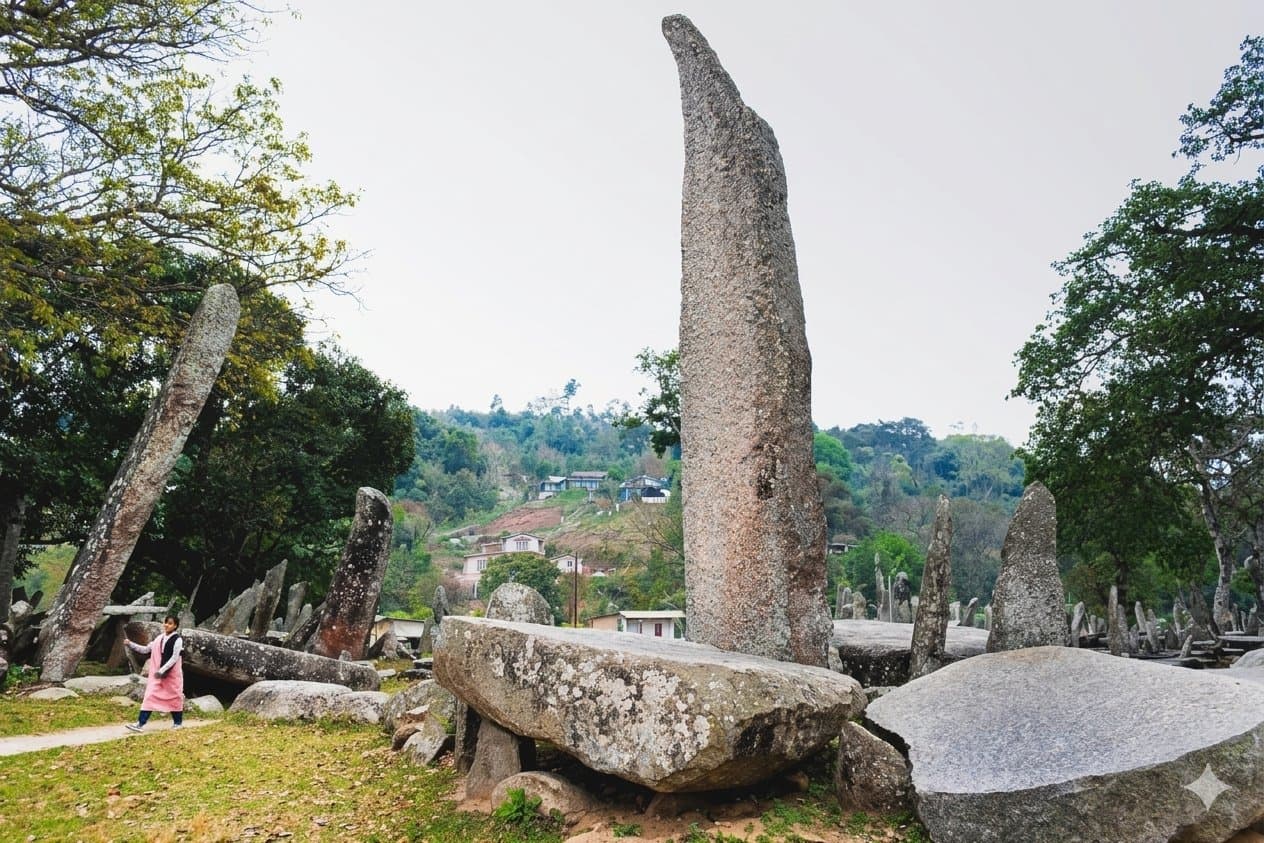
Nartiang once served as an important summer capital of the Jaintia rulers. Its historical significance is reflected in the monoliths scattered across the village, many of which were erected between the sixteenth and nineteenth centuries to commemorate rulers, warriors, ancestors and important events.
Beyond its stone monuments, Nartiang is also known for its historic Durga Temple, which reflects the region's distinctive cultural and religious connections.
Unlike destinations recognised primarily for their natural landscapes, Nartiang draws attention through its living history. Its monuments, religious traditions and local identity offer an opportunity to understand the rich heritage of the Jaintia people.
When Stones Became Stories
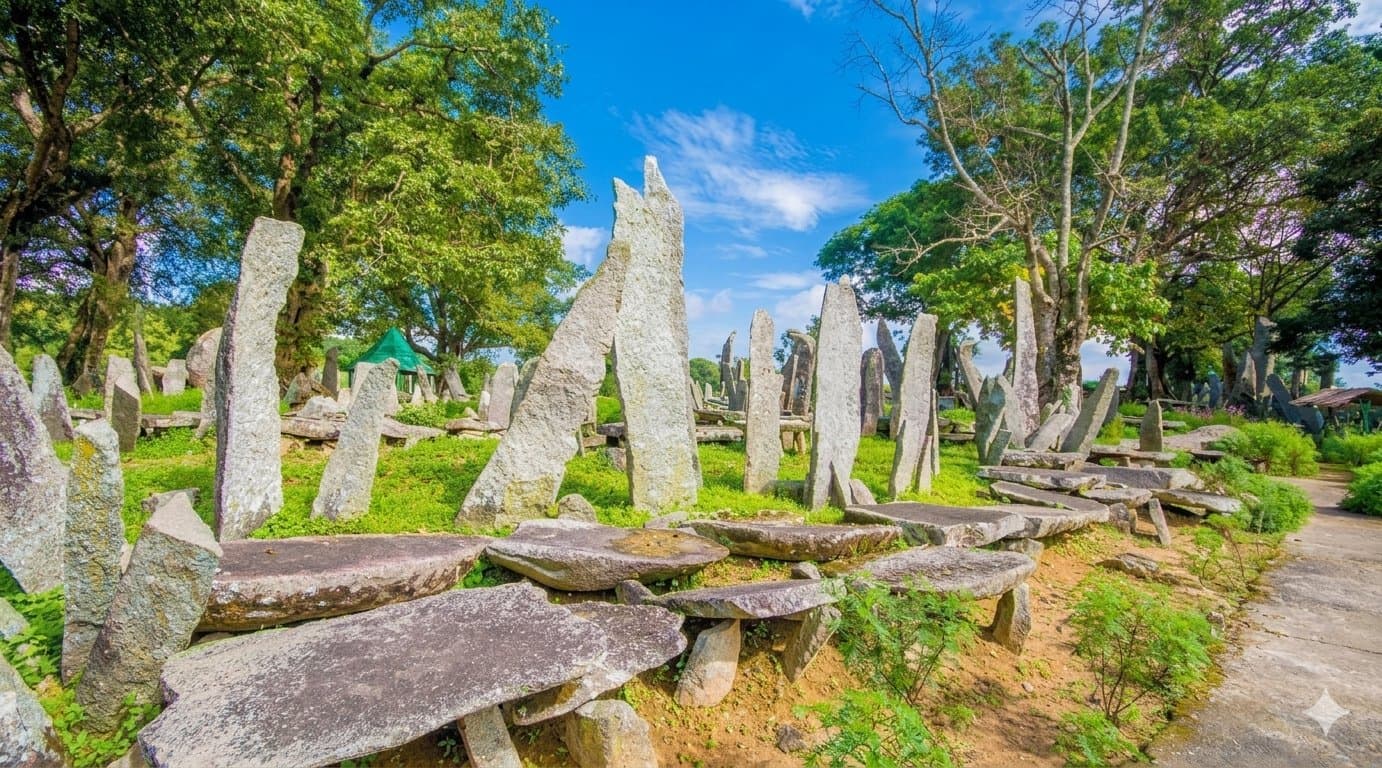
The most distinctive feature of Nartiang is its remarkable collection of megalithic stones, locally known as the Garden of Monoliths.
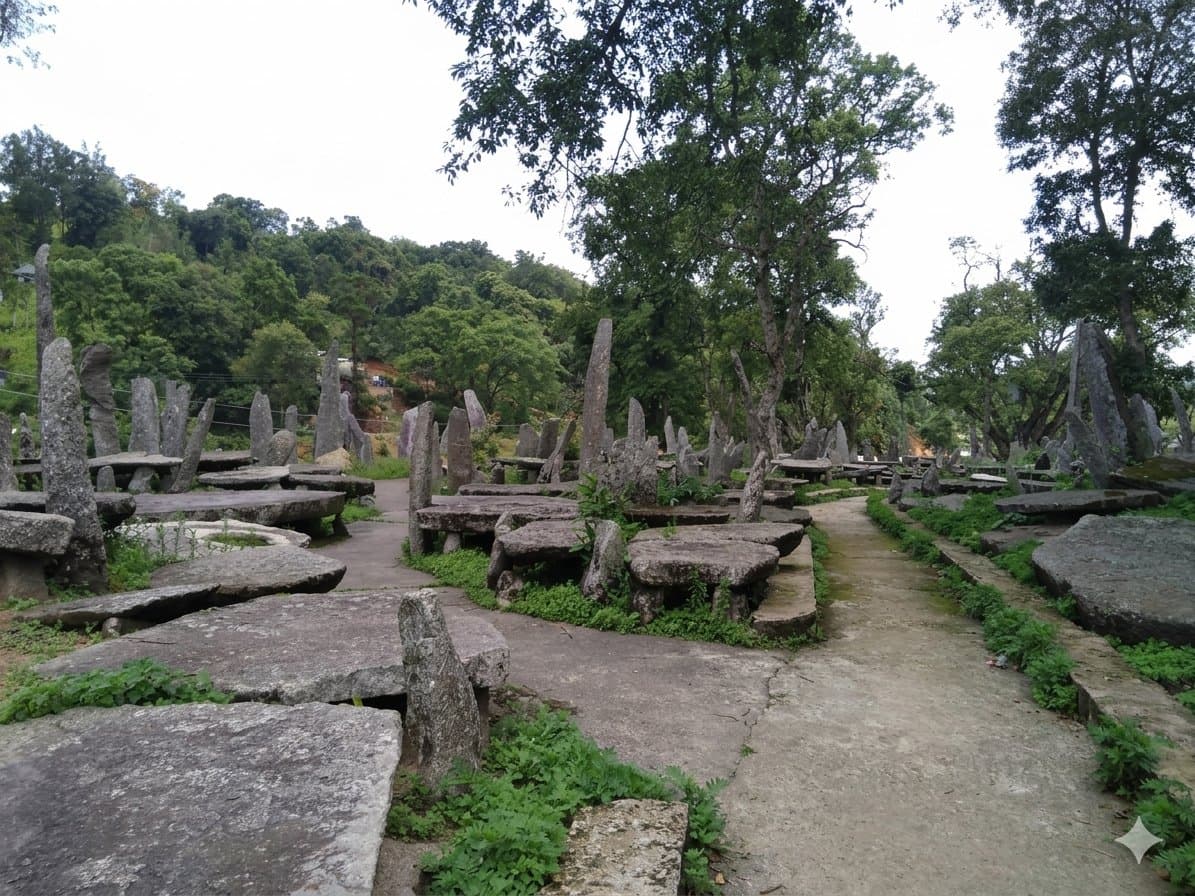
These structures are traditionally divided into two main forms: menhirs, known locally as Moo Shynrang, and dolmens, known as Moo Kynthai. The upright stones are associated with male ancestors, while the horizontal stone structures are associated with women.
Erected by Jaintia rulers and local clans between approximately 1500 and 1835, these monuments commemorate important historical events, royal achievements and ancestral memories.
One of the most prominent structures is the towering menhir associated with U Mar Phalyngki, a trusted lieutenant of the Jaintia King. Standing at more than eight metres, it remains a striking reminder of the community's megalithic traditions.
The stones are not merely archaeological structures; they represent the ways in which earlier generations recorded their history, honoured their ancestors and expressed their collective identity.
Walking among these ancient monuments offers a glimpse into a time when stone became a lasting language of remembrance.
A Sacred Space of Faith and Tradition
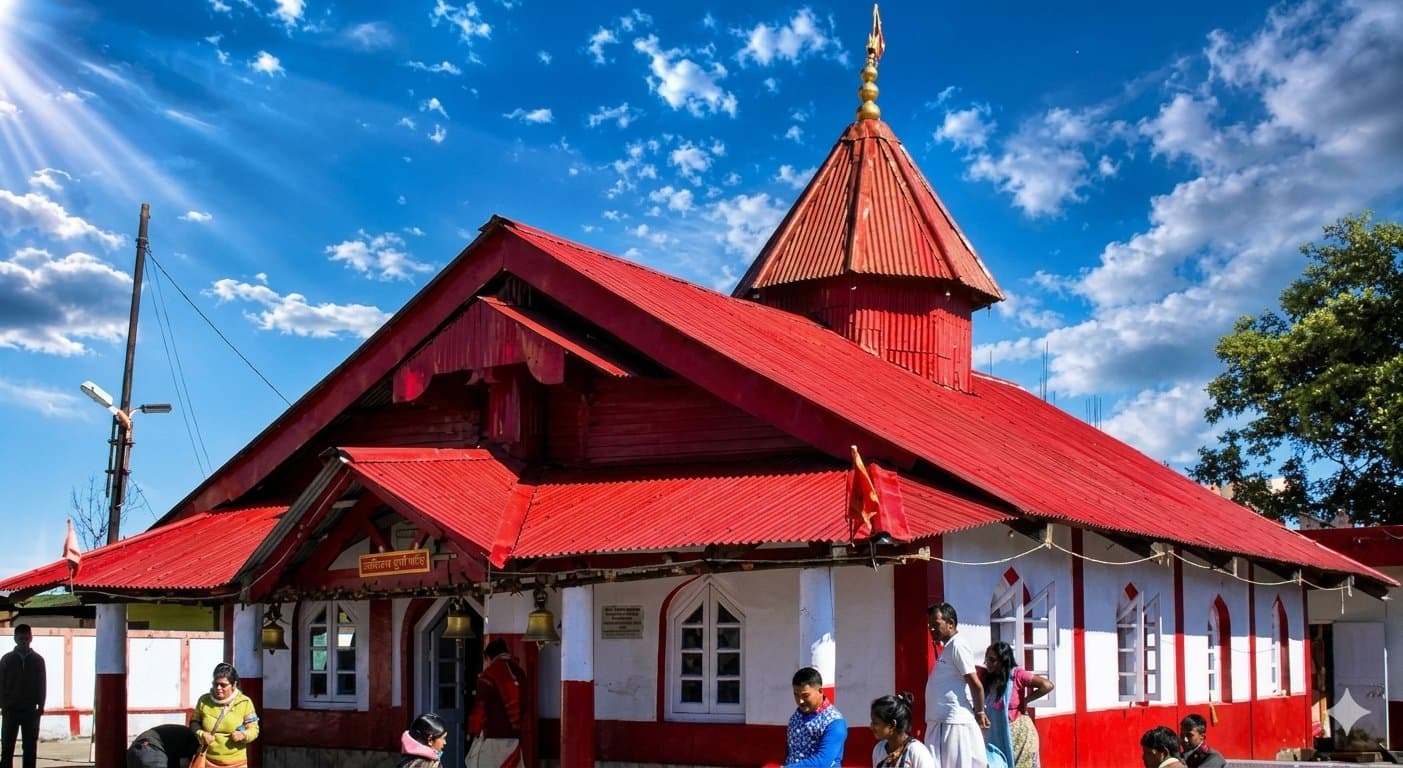
Another important landmark in Nartiang is the historic Nartiang Durga Temple, a religious site that reflects the distinctive relationship between the Jaintia Kingdom and Hindu traditions.
The temple is believed to date back several centuries and is associated with the period when the Jaintia rulers established strong religious connections with Hinduism. It remains an important place of worship, attracting devotees and visitors interested in the region's religious history.
One of its distinctive architectural features is its traditional design, which reflects elements of indigenous Khasi-Jaintia construction, including a central wooden pillar and a sloping roof.
The temple also carries a complex historical past. Historical accounts describe the practice of human sacrifice during the period of Jaintia rule, a practice that was eventually discontinued during British rule.
Today, the temple continues to hold religious significance, particularly during Durga Puja, when devotees gather to observe traditional ceremonies and worship.
Nartiang's religious heritage demonstrates how different cultural and spiritual traditions have influenced one another over generations, creating a distinctive identity within the Jaintia Hills.
The Legacy of the Jaintia People
Nartiang's history cannot be understood without recognising the cultural identity of the Pnar, also known as the Jaintia people.
The Pnars are an indigenous community of Meghalaya whose traditions, language and social organisation form an important part of the region's heritage. Their society follows a matrilineal system, in which lineage and inheritance are traditionally traced through the mother's side of the family.
Historically, Nartiang played an important role in the Jaintia Kingdom, and its monuments preserve memories of rulers, warriors and community achievements.
The surrounding region also reflects the richness of Pnar culture through its traditional festivals, music, food and community practices. Celebrations such as Behdienkhlam, one of the most important festivals of the Jaintia people, express the community's relationship with faith, agriculture and collective well-being.
The preservation of this heritage is especially important as modern influences and changing lifestyles continue to shape rural communities.
Responsible cultural tourism can contribute to this preservation by encouraging respect for religious spaces, protecting historical monuments, supporting local livelihoods and recognising the importance of indigenous traditions.
The Stories That Time Could Not Erase
Nartiang is a place where history exists beyond written records. Its towering monoliths, historic temple and enduring Jaintia traditions reveal a cultural landscape shaped by generations of memory and belief.
From the ancient stones of the Jaintia rulers to the continuing religious traditions of the Durga Temple, every part of the village reflects a different chapter of its past.
As interest in Meghalaya's lesser-known heritage destinations grows, preserving places like Nartiang becomes increasingly important. Protecting its monuments, respecting local customs and supporting its communities can help ensure that this history remains meaningful for future generations.
Perhaps the greatest significance of Nartiang lies in what its stones represent: the human desire to remember, honour and leave behind something that time cannot easily erase.
Here, history does not remain buried in the past. It stands quietly, waiting to be understood.
Share this article:
About Admin
Travel enthusiast and writer sharing stories from around the world. Passionate about discovering hidden gems and cultural experiences that inspire wanderlust.