Travel
KISAMA: WHERE HERITAGE FINDS ITS VOICE
Admin
Author
October 31, 2026
3 min read
1 views
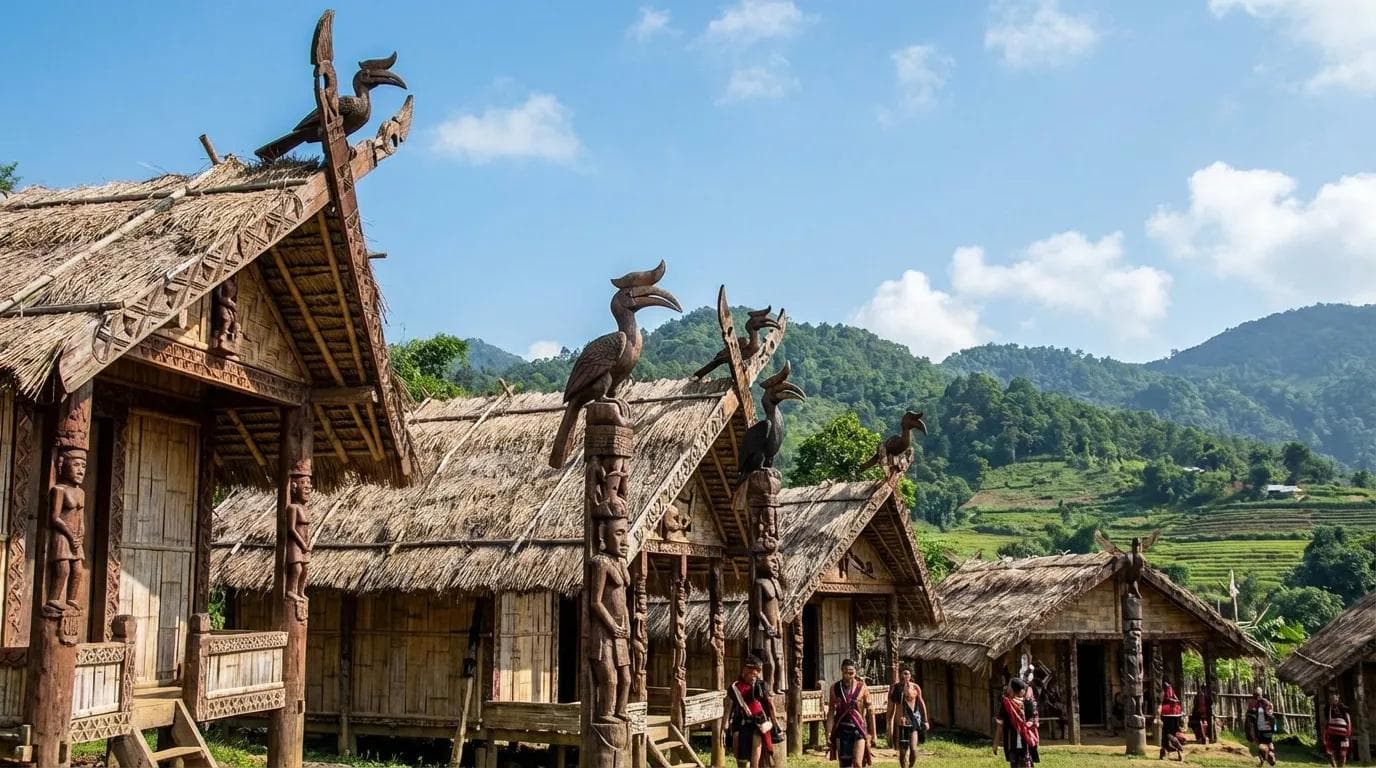
A Village of Many Stories
Located approximately 10–12 kilometres from Kohima, Kisama Heritage Village is a cultural complex created to preserve and showcase the diverse traditions of Nagaland. Its name is derived from Kigwema and Phesama, the two neighbouring villages on whose land the heritage village stands. The word is formed from “Ki” for Kigwema, “Sa” for Phesama and “Ma”, meaning village.
Unlike an ordinary settlement, Kisama has been developed as a shared cultural space where the distinct identities of Naga communities can be represented together. Traditional structures, community spaces and cultural displays offer visitors an introduction to the region's many histories and ways of life. Throughout the year, it hosts cultural gatherings and events, but it becomes especially vibrant during the Hornbill Festival in December.
THE ARCHITECTURE OF MEMORY
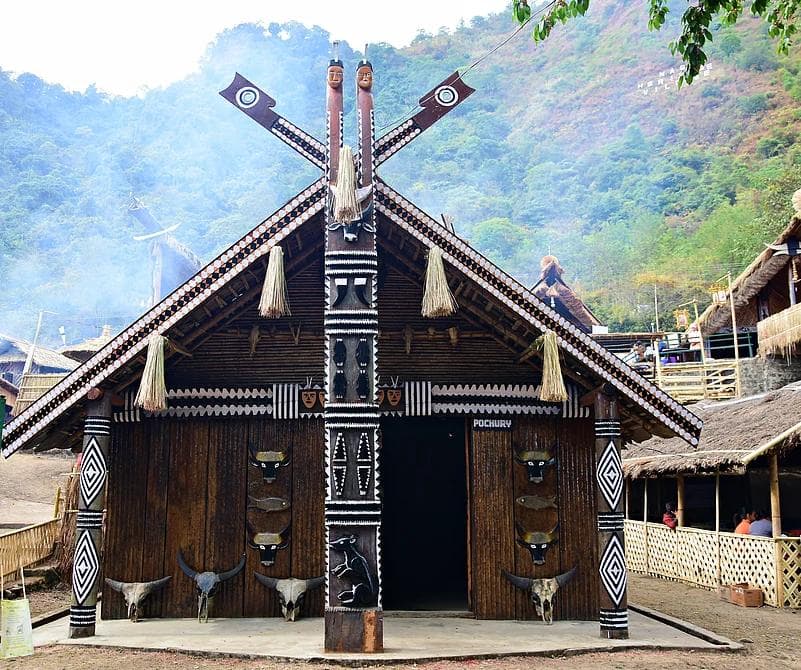
Where every structure carries a story
At the heart of Kisama are traditional tribal houses known as morungs, historically associated with community life and the learning of skills, customs and collective responsibilities. The structures at the heritage village represent different Naga tribes through distinctive architectural forms and decorative elements.
Each morung offers a glimpse into the craftsmanship, materials and cultural expressions associated with the community it represents. Carved details, wooden structures and traditional motifs are more than architectural features; they reflect the knowledge and artistic practices passed down through generations.
The morung is also an important reminder of how traditional Naga societies organised community life. While their roles varied across communities, these institutions helped preserve knowledge, social values and a sense of belonging.
THE RHYTHM OF MANY TRADITIONS
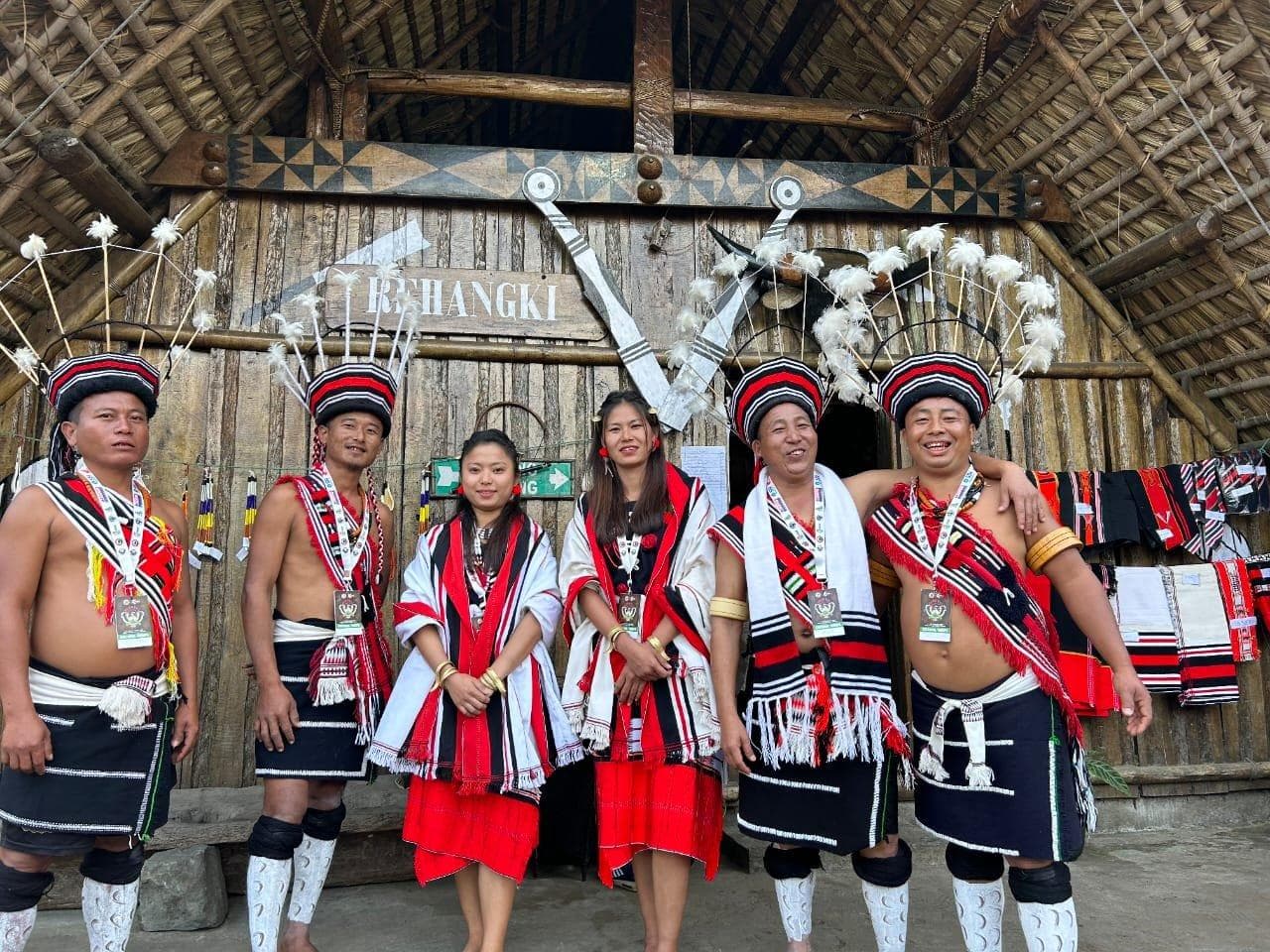
Where culture speaks through music and movement
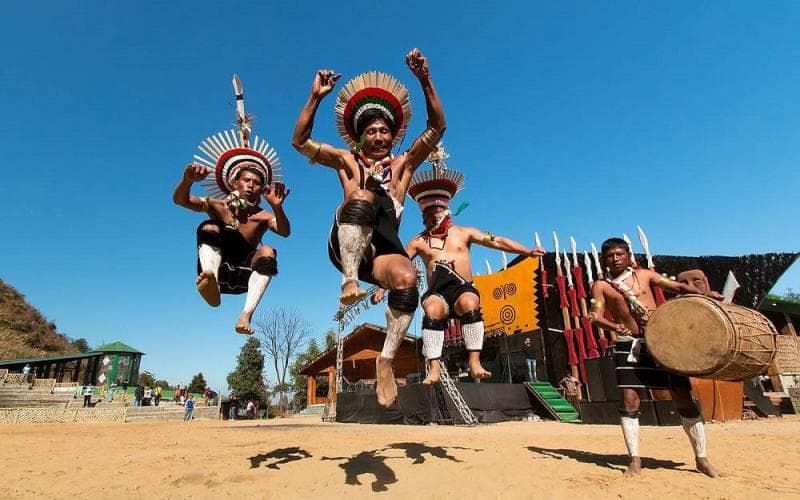
Kisama is closely associated with the Hornbill Festival, an annual celebration that brings together the diverse cultural communities of Nagaland. Conceived in 2000, the festival provides a platform for different Naga tribes to present their traditions, artistic expressions and contemporary identities.
Traditional songs, folk dances, indigenous games and ceremonial attire form an important part of the celebrations. Each performance carries elements of community history and collective memory, expressed through rhythm, movement and distinctive cultural symbols.
The festival also highlights local cuisine, handloom, handicrafts and contemporary creative expressions. Rather than presenting culture as something frozen in the past, Kisama offers a space where heritage can continue to evolve while remaining connected to its roots.
CRAFTED BY HAND, CARRIED FORWARD
The living knowledge behind Naga artistry
The cultural identity of Nagaland is also reflected in its traditional crafts. Weaving, bamboo work, pottery, wood carving and ornament-making demonstrate the skill and creativity found across its communities. These practices are closely connected to everyday life, local materials and knowledge developed over generations.
At Kisama, craft displays and artisan demonstrations help bring these traditions into focus. Different communities have their own techniques, designs and forms of artistic expression, making the region's craft heritage remarkably diverse.
The continued practice of these skills depends on the people who preserve and pass them on. Supporting local artisans and recognising the value of handmade work helps ensure that traditional knowledge remains relevant to younger generations. In this way, craft becomes more than an object on display; it becomes a living connection between past and present.
Heritage Is Meant to Live On
Kisama Heritage Village is a reminder that culture is not defined only by monuments or historical records. It survives through the songs people sing, the skills they practise, the stories they share and the traditions they choose to carry forward.
By bringing together the many cultural expressions of Nagaland, Kisama creates a space for understanding the region beyond its landscapes. Its significance lies not simply in what visitors can see, but in the histories and identities that these traditions represent.
To experience Kisama meaningfully is to recognise that heritage belongs first to the communities who keep it alive. Respectful cultural exchange, appreciation for local craftsmanship and support for community-led preservation can help ensure that these stories continue to find their voice.
Share this article:
About Admin
Travel enthusiast and writer sharing stories from around the world. Passionate about discovering hidden gems and cultural experiences that inspire wanderlust.